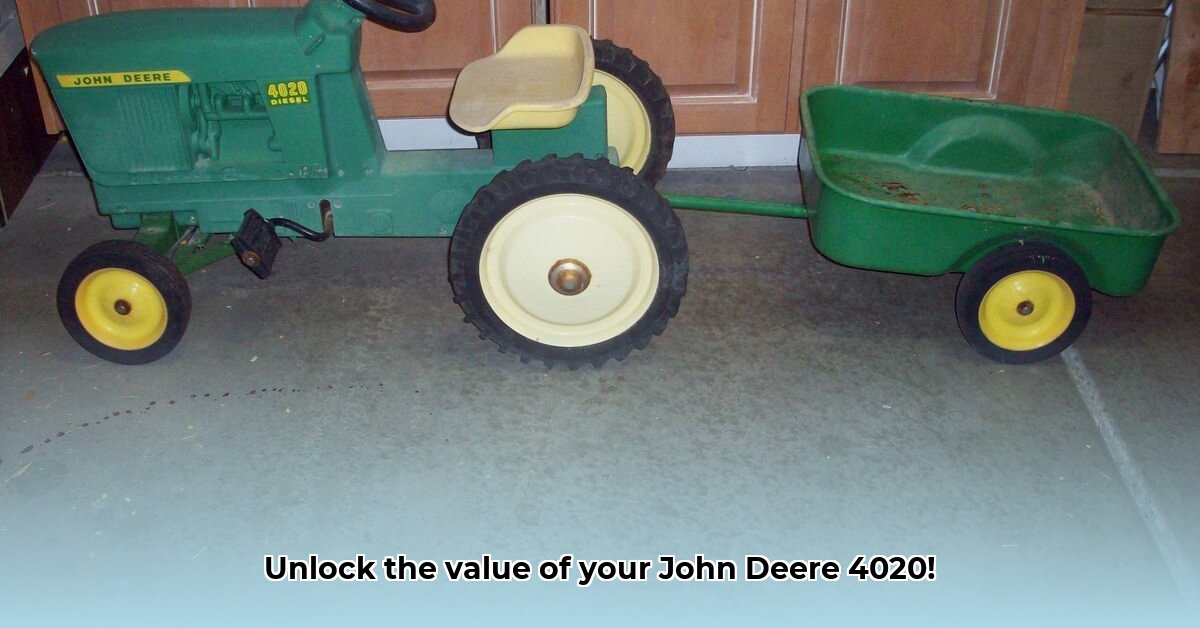
John Deere 4020 pedal tractors: childhood memories for some, valuable collectibles for others. This guide helps you navigate the market, whether you're buying, selling, or simply curious about their value. We'll explore factors influencing price, offer actionable steps, and provide insights into current market trends. For additional visual references, check out these tractor drawings.
Understanding the John Deere 4020 Pedal Tractor Market
The Ertl-produced John Deere 4020 pedal tractor, mainly from the early 1990s, has become a sought-after collectible. Like vintage baseball cards, their value varies greatly. This guide will help decipher this fascinating market and its complexities.
Factors Affecting Value: Condition is Key
A tractor's condition is paramount. A pristine example will command a significantly higher price than a damaged one. Even minor details matter:
- Paint: Faded or chipped paint dramatically reduces value. Original paint is highly desirable.
- Plastic: Are the yellow plastic seats original? Replacements lower value.
- Metal: Scratches and dents impact value, especially on the body and wheels.
- Accessories: A front loader or dual wheels significantly increase value. Complete sets—with all original parts—are always more desirable.
Pricing and Current Market Trends
Prices vary widely. A well-worn 4020 might sell for around $200, but a mint-condition tractor could fetch over $300, or even more, depending on specific features and market conditions. Isn't it fascinating how much condition impacts value? This highlights the importance of thorough inspection and detailed descriptions.
This market lacks a definitive price guide; hence, careful research is crucial. Online marketplaces provide snapshots of current prices, but collector forums offer crucial historical context and expert opinions.
Actionable Steps: A Buyer's and Seller's Guide
For Buyers:
- Research: Explore online marketplaces (eBay, etc.) to compare prices and conditions. Note discrepancies to understand the factors driving price differences.
- Inspect Thoroughly: Before purchasing, carefully examine the tractor for scratches, dents, broken parts, or faded paint. Don't rush!
- Verify Authenticity: Be cautious of counterfeits. Compare your potential purchase to verified authentic examples found online. Consult experienced collectors if unsure.
For Sellers:
- Honest Assessment: Be realistic about your tractor's condition. Document imperfections honestly to build buyer trust.
- High-Quality Photos: Take numerous well-lit photos showcasing all angles and details, highlighting both strengths and weaknesses.
- Detailed Description: Write a comprehensive description, mentioning both positives and negatives. Transparency attracts serious buyers.
Market Outlook & Risk Mitigation
The long-term outlook is generally positive, with consistent collector interest. However, inherent risks exist:
| Risk Factor | Mitigation Strategy |
|---|---|
| Damage/Wear | Meticulous inspection (buyers); detailed photos/descriptions (sellers) |
| Counterfeit/Replica | Careful comparison to authentic examples; buying from reputable sellers |
| Market Fluctuations | Stay informed about market trends; diversify your collecting interests |
| Incomplete/Missing Accessories | Thoroughly check for all parts; adjust pricing accordingly |
How to Accurately Assess Value: A Step-by-Step Guide
Key Takeaways:
- Value depends on condition, model specifics, and accessories.
- Accurate identification is critical (use online resources).
- Condition is paramount; pristine tractors command top prices.
- Online marketplaces and collector forums provide valuable market data.
- Original parts are highly desirable; restorations are possible but costly.
1. Precise Model Identification: Carefully examine the tractor for markings. Cross-reference your findings with images and descriptions on dedicated collector forums (such as Yesterday's Tractors 1).
2. Condition Assessment: Grade the tractor (mint, near-mint, good, etc.). Document any damage with photos.
3. Accessorizing: Note any original accessories (trailers, etc.). These considerably add to the value.
4. Online Market Research: Analyze completed listings on eBay and similar sites to understand the current price range. Remember, prices fluctuate!
5. Collector Forum Insights: Engage with experienced collectors for valuable perspectives on condition, rarity, and model variations.
6. Refining Your Valuation: Combine your findings from steps 1-5 for a comprehensive valuation. Remember, it's an estimate, not an exact science. Market fluctuations are inherent.
7. Taking Action: (See "Actionable Steps" above for detailed guidance on buying and selling.)